What to put on a line sheet
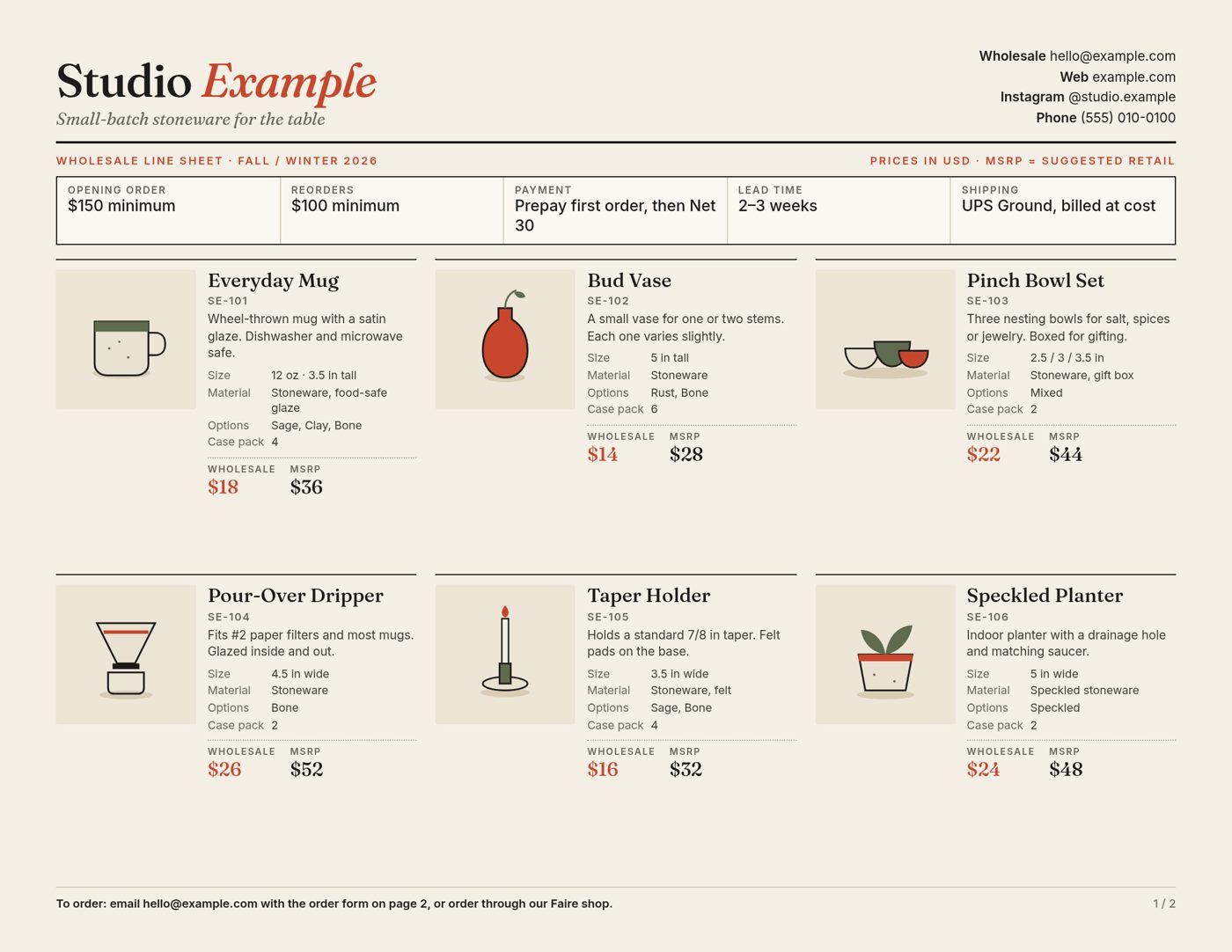
- Brand name, contact and how to order. Wholesale email, website, Instagram, and whether you take orders by email, on an order form or through Faire.
- One clear photo per product on a plain background, cropped the same way, so a buyer can scan the page in seconds.
- Product name and SKU. The SKU is what goes on the purchase order and the reorder.
- Short description, size and materials. Enough for a buyer to picture it on the shelf and answer a customer's questions.
- Options: colors, scents or sizes, each with its own SKU if you stock them separately.
- Wholesale price and MSRP (suggested retail) side by side. Not sure how to set them? Use the wholesale price calculator.
- Case pack and minimums: how many units per product, the opening order minimum and the reorder minimum.
- Terms: payment terms, lead time, shipping, and your policy on damages and returns. If you offer consignment, say so and to whom.
What shops actually ask for
We read the submission pages of all 81 shops in the Open Shelf directory. 13 of them ask for a line sheet outright, and 12 ask for wholesale prices or pricing details as part of a submission. A few, in their own words:
| Shop | What their submission page asks you to include |
|---|---|
| Catbird New York | materials, wholesale prices, turnaround, and current stockists |
| Driggs Mercantile New York | clear photos, descriptions, wholesale prices, website and social links |
| Magpie New York | images, wholesale prices, contact, plus a short company description |
| New York Historical Museum Store New York | product images/details, wholesale cost, vendor contact info |
| Museum of the City of New York Shop New York | a line sheet/catalog or price list, and ordering policies |
| Myrtle Los Angeles | clear photos or a lookbook plus a detailed line sheet |
| re_ grocery Los Angeles | pricing, bulk/foodservice quantities, lead times and delivery fees |
Summarized from each shop's own submission page, verified 2026-10-17. Policies change, so check the shop's page before you pitch.
How to make your line sheet in 5 steps
- Download the template as an editable .xlsx (or import it into Google Sheets), or print the blank PDF to sketch your layout first.
- Shoot or crop your photos square, on the same plain background, in the same light.
- Price every product with a wholesale price and an MSRP. Most shops expect a margin of around 50%, often called keystone.
- Fill in your terms at the top: minimums, payment, lead time and shipping. These are the questions a buyer would otherwise have to email you about.
- Export a PDF (landscape, fit to width) and keep it small enough to attach to an email. Name it with your brand and season, e.g.
YourBrand-LineSheet-FW26.pdf.
Line sheet template FAQ
What's the difference between a line sheet, a catalog and a lookbook?
A line sheet is the working document: products, SKUs, prices and terms. A lookbook is mood and styling photography. A catalog is a longer version of the line sheet for big collections. For a first pitch to a small shop, the line sheet is the one to send. Some shops, like Myrtle, ask for photos or a lookbook in addition to it.
Can I use this line sheet template in Canva?
Yes. Canva can import a PDF and turn it into an editable design, so you can upload the blank PDF and restyle it with your own fonts and colors. If you just need something quick and tidy, the Excel / Google Sheets version is faster to keep up to date.
Can I use it in Google Sheets or Excel?
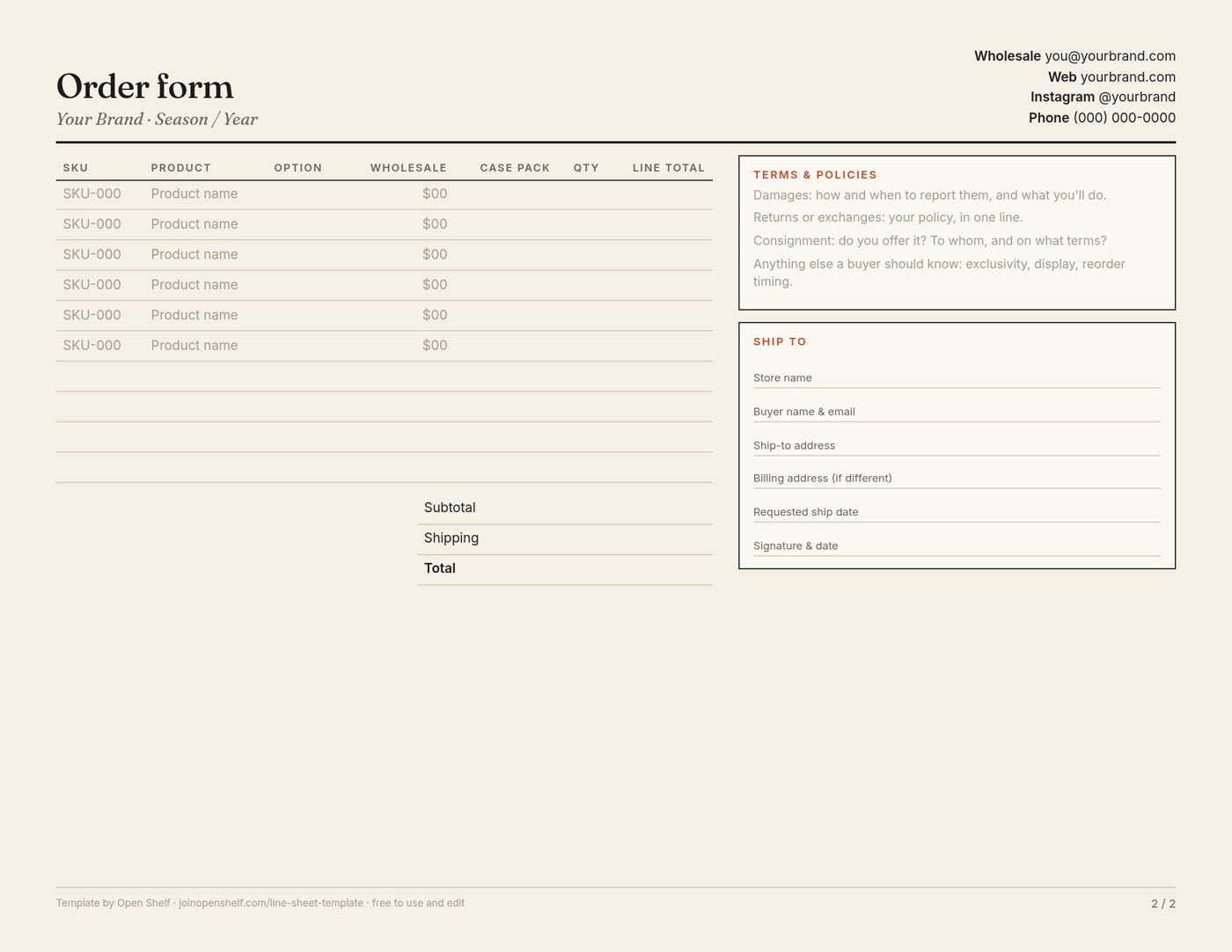
Yes. The .xlsx opens in Excel, Apple Numbers and Google Sheets (File → Import). It includes a line sheet tab, a filled example tab, and an order form tab where line totals and the minimum-order check calculate automatically.
PDF or spreadsheet: which should I send?
Send a PDF with your pitch. It looks the same on every device and on a buyer's phone. Keep the spreadsheet as your master copy, and send the order form tab to shops that are ready to order.
Is it free to use?
Yes, for any brand and any shop, with no sign-up. Edit it however you like.